
Working visit by ministries and ZonMw to GoHot
March 2026
On Tuesday, March 10, 2026, the Ministry of Health, Welfare and Sport, the Ministry of Agriculture, Nature and Food Quality, and ZonMw paid a working visit to the GoHot project. The visit provided an opportunity to gain insight into the project, which has now been running for about a year, and to strengthen the interaction between research and policy.
The project 'Healthy coping with heat and pollen in a changing climate', abbreviated to GoHot, builds on two previous ZonMw pilot projects: Warm Aanbevolen (Warmly Recommended) and KAPPA, which focused on the health effects of heat and pollen respectively. In recent years, it has become clear that climate change is increasing the likelihood of both extreme heat and higher pollen concentrations. This poses a growing health risk for many people, especially certain vulnerable groups.
This became clear in June 2023, for example, a month with record-breaking hot days and high pollen concentrations, during which nearly 900 more people than usual died in the Netherlands.
Reducing health risks
Experts in the field of heat and pollen have therefore joined forces in the GoHot project. Since early 2025, a consortium of 16 organizations has been working together to gain more insight into who is most at risk, when this occurs, and how people can be informed and protected in a timely manner. The ultimate goal is to better understand and reduce the health risks associated with heat and pollen in a changing climate.
From knowledge to practice
During the working visit, project leader Arnold van Vliet (WUR) gave a presentation on the project's design and initial insights. Participants then joined a focus group led by Bob Mulder (WUR) to discuss how knowledge from research, such as that from the GoHot project, can be better utilized in policy.
The GoHot project itself also uses focus groups to investigate how the knowledge gained can be effectively communicated to target groups. For example, focus groups are organized with so-called intermediaries: people who are in direct contact with (vulnerable) citizens, such as general practitioners, home care workers, and energy coaches. They often form an important link between scientific knowledge and people's daily actions. By engaging in dialogue with various groups of intermediaries, the project hopes to develop concrete communication strategies to better inform people about heat and pollen within trusted local networks.
Heat and pollen in the city
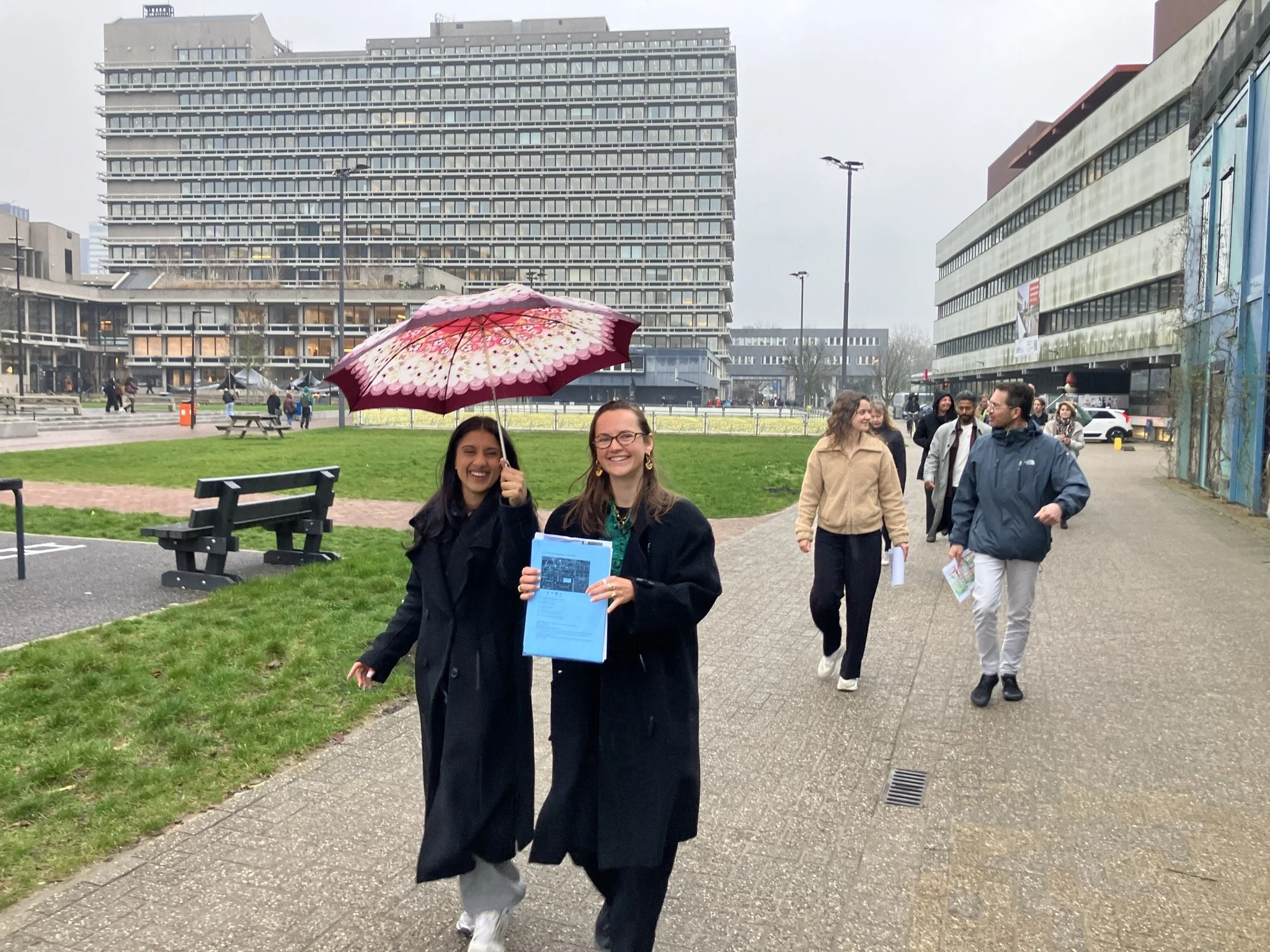
The program continued with a walk through Amsterdam accompanied by Eline Coolen and Pratischa Koirala (GGD Amsterdam). Unfortunately for the participants, the walk took place in the rain, but that did not dampen the spirits and was better for people with pollen allergies! Through an interactive game, the participants explored the choices that can be made to limit the health impact of heat and pollen. It became clear that measures can also create dilemmas.
On the left is a street lined with trees. These provide shade in the summer, but the trees planted are birch trees, which produce a lot of pollen that many people are allergic to. On the right is a neighborhood with little greenery. Due to the lack of shade, extensive paving, and many parked cars, it gets very hot here in the summer.
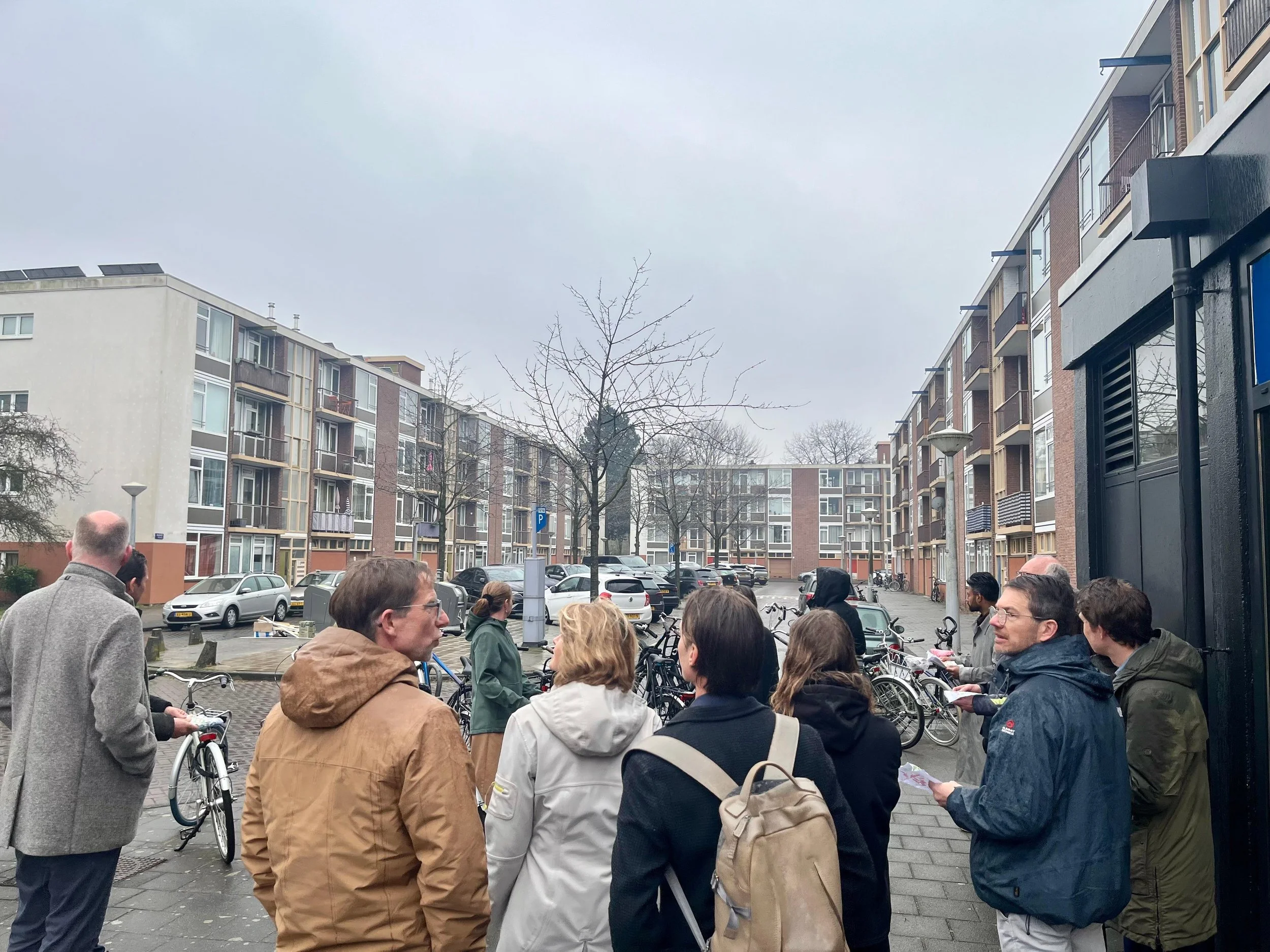
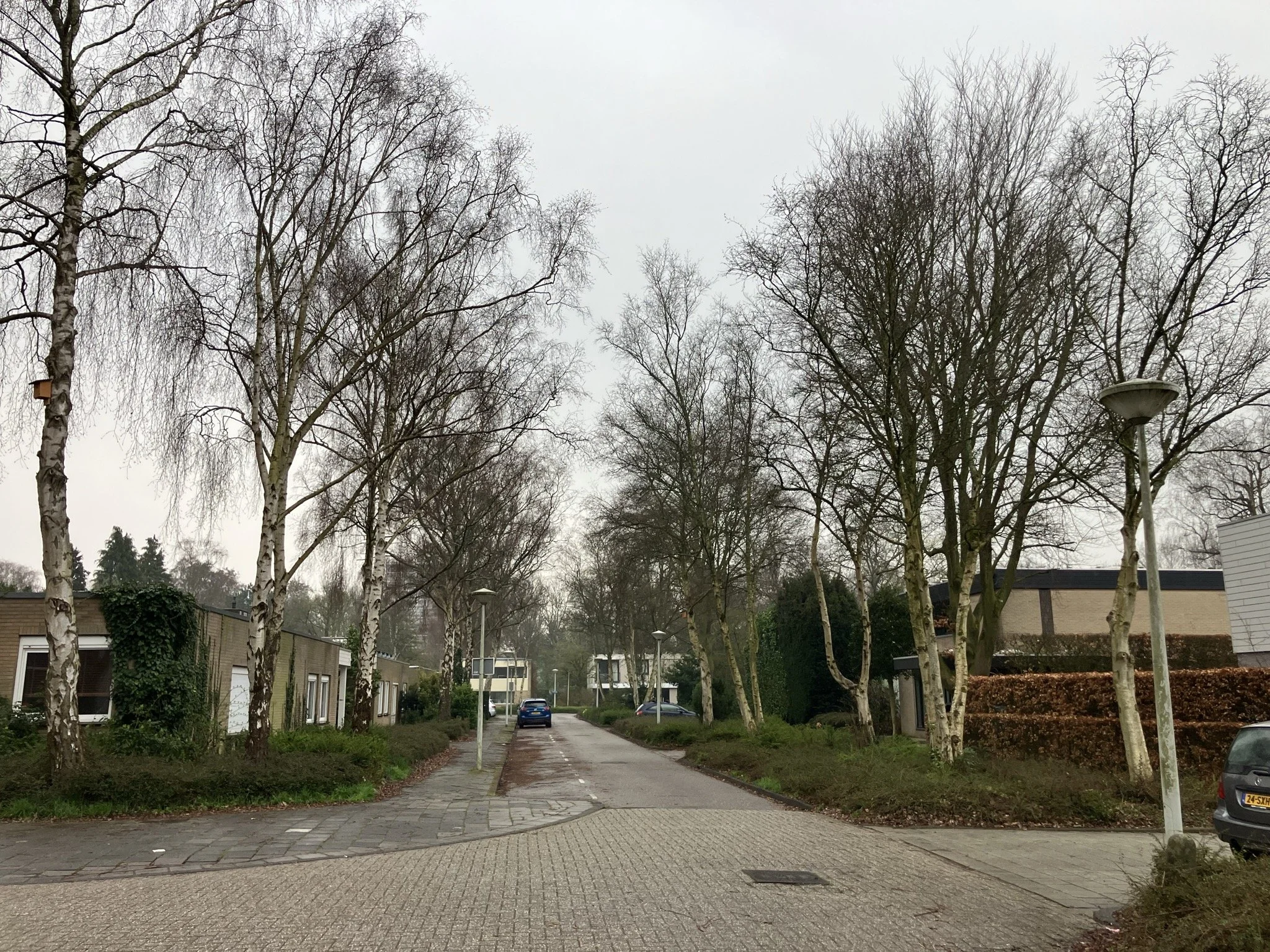
For example, more greenery can provide cooling, but certain types of trees or plants can also exacerbate hay fever symptoms. The GoHot project is investigating the impact of allergen-producing trees on pollen concentrations indoors and outdoors. It is also looking at how information about planting low-allergen trees can best be shared by means of a tree compass.
Visit to the climate chamber
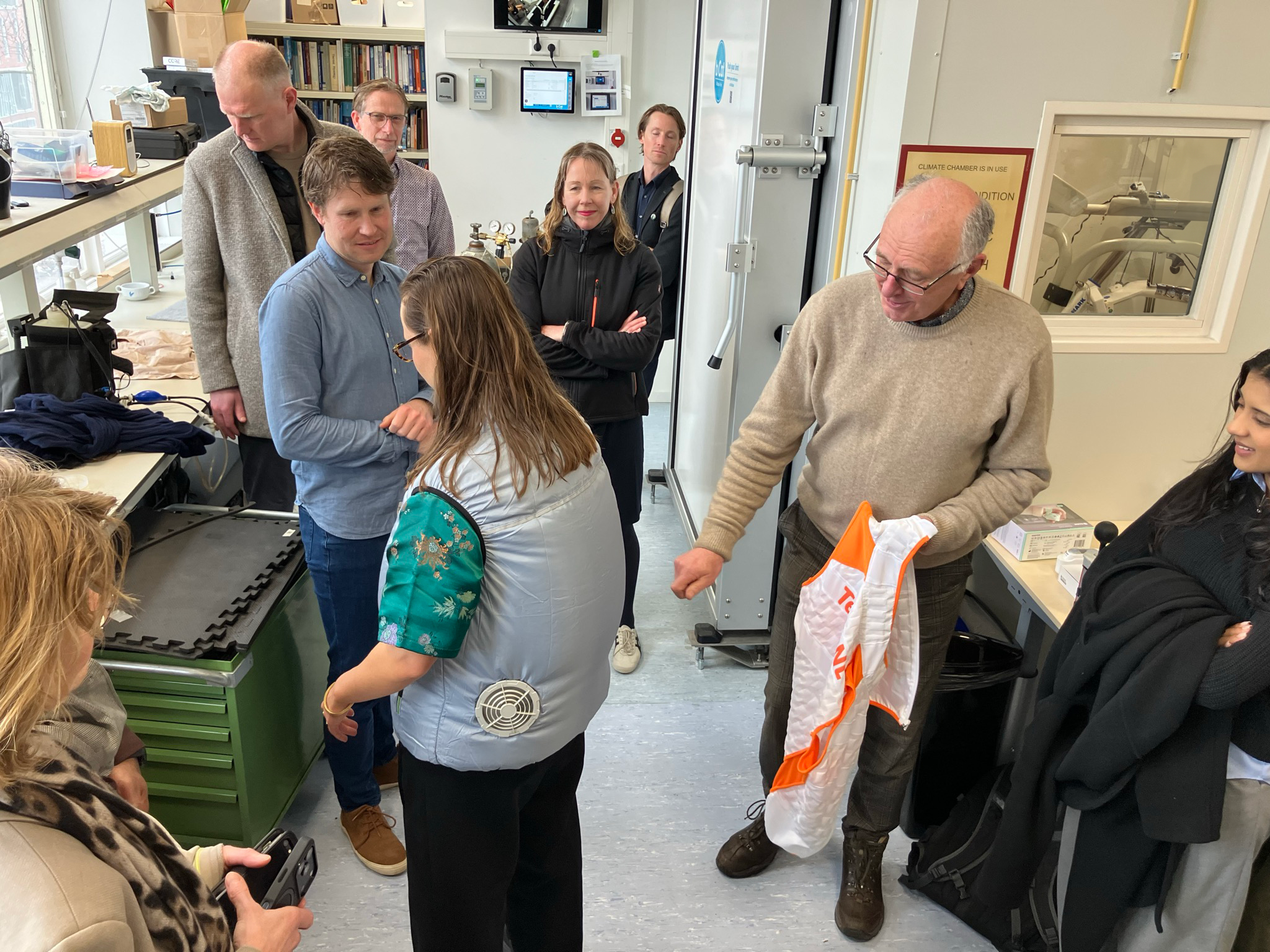
The working visit concluded with a visit to the climate chamber at VU University Amsterdam. Here, participants could warm up again after the walk. Researchers Hein Daanen and Eline van de Kamp (VU) demonstrated how different climate conditions can be simulated to conduct research into the heat regulation of babies. Babies are particularly vulnerable during extreme heat, but physiologically speaking, little research has been done into how their bodies cope with high temperatures. The GoHot project is investigating in a safe manner how babies lose heat at different temperatures.
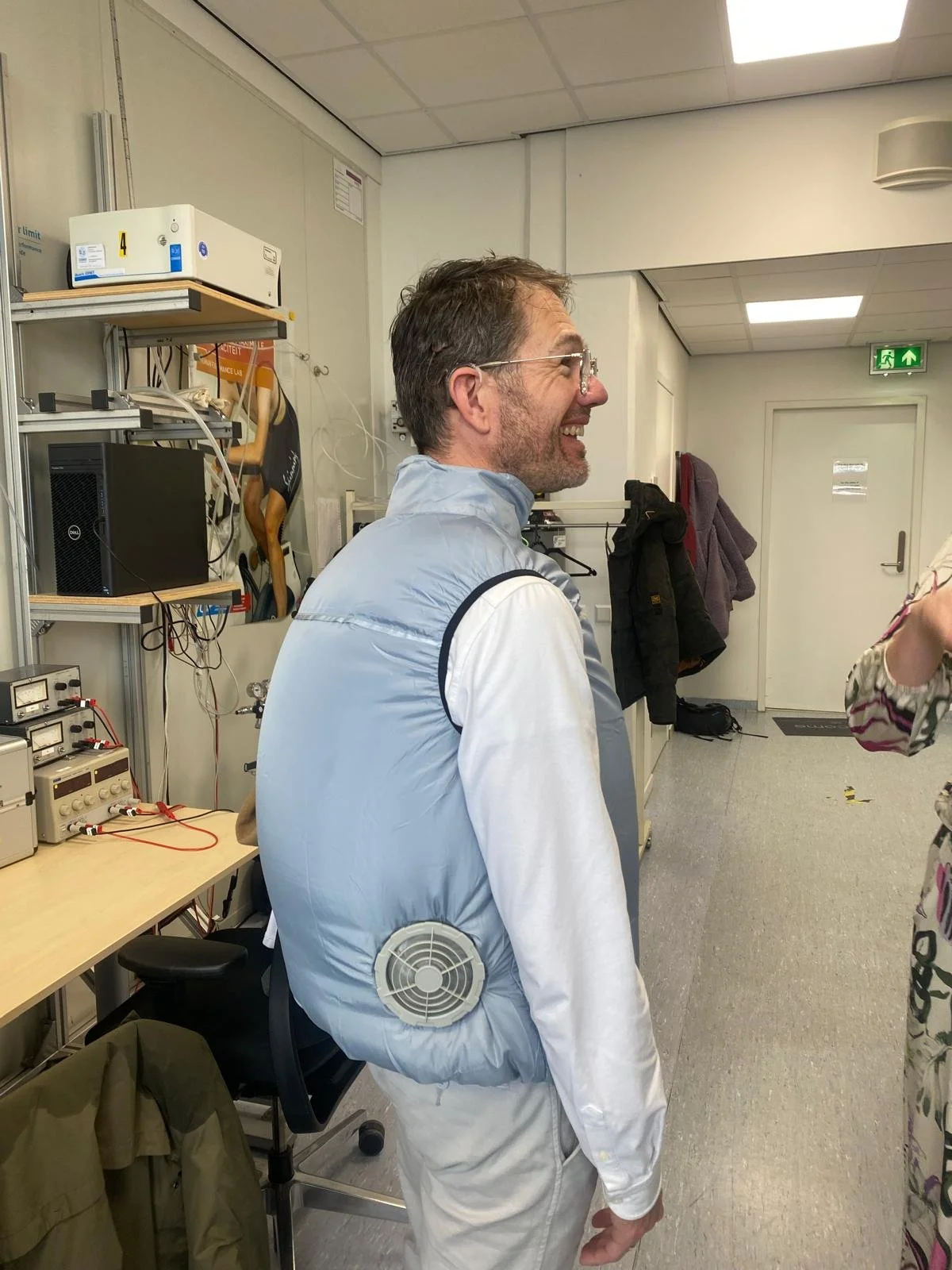
During the working visit, various personal cooling strategies were also demonstrated and tested, such as cooling and ventilation vests. GoHot is looking at the pros and cons of different strategies so that practical advice can be developed for various vulnerable groups.
The visit underscored the importance of close cooperation and connection between science, policy, and practice in reducing the health risks of heat and pollen in a changing climate.